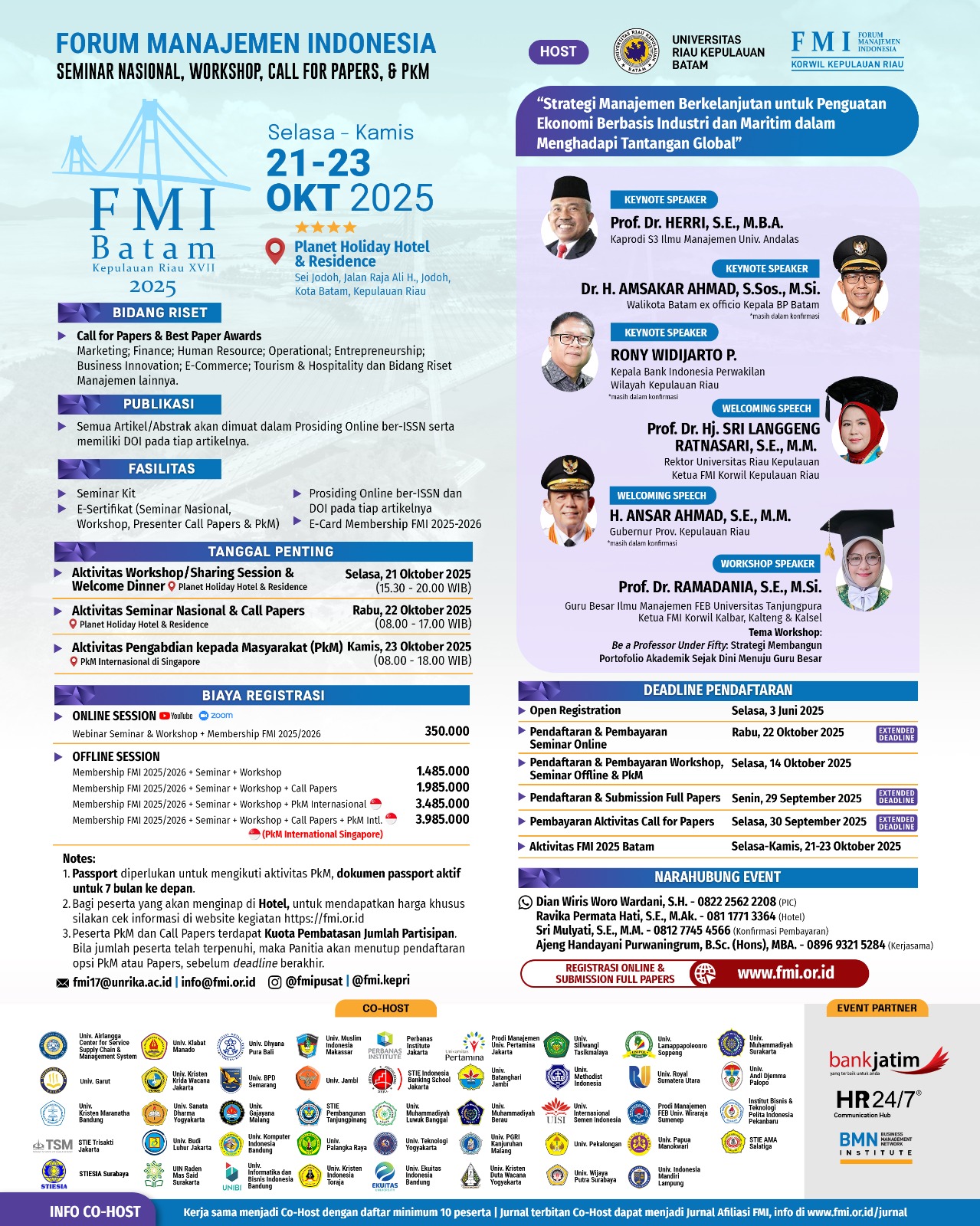
Environmentally Friendly School Design towards Sustainable Adiwiyata Schools
DOI:
https://doi.org/10.47747/snfmi.v3i1.3145Abstract
Muhammadiyah 7 Joyosuran Elementary School has the potential to become an Adiwiyata School but still faces obstacles, including a lack of mentorship and uncoordinated implementation of green schools, which have led to low interest in literacy related to the Adiwiyata School concept. However, through a community empowerment program, the school has successfully increased the knowledge of school residents about the Adiwiyata school concept, fostering environmental awareness and encouraging the development of potential, increased competitiveness, and school independence towards the Adiwiyata School predication. This success is a testament to the dedication and hard work of our school community.
References
Ferazona, S., Suryanti, S., & Rosiyah, M. M. (2022). Sosialisasi pentingnya penghijauan sekolah di SDN 004 Sekeladi Hilir Kecamatan Rokan Hilir. Dedikasi: Jurnal Pengabdian Masyarakat, 4(2), 144. https://doi.org/10.32332/d.v4i2.5637
Fuadi, H., Robbia, A. Z., Jamaluddin, J., & Jufri, A. W. (2020). Analisis faktor penyebab rendahnya kemampuan literasi sains peserta didik. Jurnal Ilmiah Profesi Pendidikan, 5(2), 108–116. https://doi.org/10.29303/jipp.v5i2.122
Guntur Suryo Putro, Arfiany, & Yasni. (2024). Analisis dampak sosial dari implementasi program pengabdian berbasis teknologi di pedesaan. ABDI DAYA: Jurnal Pengabdian dan Pemberdayaan Masyarakat, 2(1), 1–13. https://doi.org/10.52421/abdidaya.v2i1.555
Kuswati, R., Anggono, A. D., Syamsiyah, N. R., Anindita, Y., Zakiyah, S., & Mahiroh, A. W. (2025). Enhancing understanding of green economy and implementing appropriate technology towards an Adiwiyata schools. Community Empowerment, 10(2), 287–297. https://doi.org/10.31603/ce.12342
Kuswati, R., Choirunnisa, B. A., Ahmadi, M. A., Abbas, N. I., Waskito, J., Achmad, N., Soepatini, S., & Irawati, Z. (2024). Institutional enhancement through green school program in order to achieving “Sekolah Adiwiyata.” British Journal of Environmental Studies, 4(1), 41–47. https://doi.org/10.32996/bjes.2024.4.1.6
Pelita, A. C., & Widodo, H. (2020). Evaluasi program sekolah Adiwiyata di Sekolah Dasar Muhammadiyah Bantul Kota. Sekolah Dasar: Kajian Teori dan Praktik Pendidikan, 29(2), 145–157. https://doi.org/10.17977/um009v29i22020p145
Pengabdian Masyarakat Sapangambei Manoktok Hitei, J., Endartiwi, S. S., Sholiha, A., Lestari, A. R. P., & Prodi Kesehatan Masyarakat STIKES Surya Global Yogyakarta. (2024). Mewujudkan green school. JPMSM: Jurnal Pengabdian Masyarakat Sapangambei Manoktok Hitei, 4, 260–266.
Safrizal, S., Zaroha, L., & Yulia, R. (2020). Kemampuan literasi sains siswa sekolah dasar di sekolah Adiwiyata (Studi deskriptif di SD Adiwiyata X Kota Padang). Journal of Natural Science and Integration, 3(2), 215. https://doi.org/10.24014/jnsi.v3i2.9987
Wijayanti, S. N., Setiawan, A. N., & Makrufi, A. D. (2021). Implementation of Muhammadiyah Green School as an effort to fulfill constitutional rights. Community Empowerment, 6(7), 1199–1211. https://doi.org/10.31603/ce.4984
Wiraputra, I. P. F. A., Suastra, I. W., & Sudiana, I. N. (2023). Dampak positif model pembelajaran SAVI berbantuan mind mapping terhadap literasi sains dan hasil belajar IPA. Jurnal Ilmiah Pendidikan dan Pembelajaran, 7(1), 124–133. https://doi.org/10.23887/jipp.v7i1.60087
Yusmar, F., & Fadilah, R. E. (2023). Analisis rendahnya literasi sains peserta didik Indonesia: Hasil PISA dan faktor penyebab. LENSA (Lentera Sains): Jurnal Pendidikan IPA, 13(1), 11–19. https://doi.org/10.24929/lensa.v13i1.283.